
Demographic Change in Denmark
The change has already happened
There are two types of community in Denmark. There are the communities that working age Danish people move to and there are the communities that working age Danish people move out of.
The communities like Copenhagen, Aarhus and Horsens that are attractive to working age Danish people are also attractive to international people, so these communities are expanding.
There are four subsets of communities where working age Danish people are leaving (or alternatively they stay but retire)
Internationals are arriving and keeping the working-age population steady.
Internationals are arriving and increasing the working-age population.
Internationals are arriving but it still isn’t enough to keep the working-age population steady.
No one is offsetting the loss of the working-age population.
I took the tool I made for another post, and added new functions so I could explore the demographic change occurring in Denmark now.

Case Study Time
1: Herning (13.2% working age foreigners)
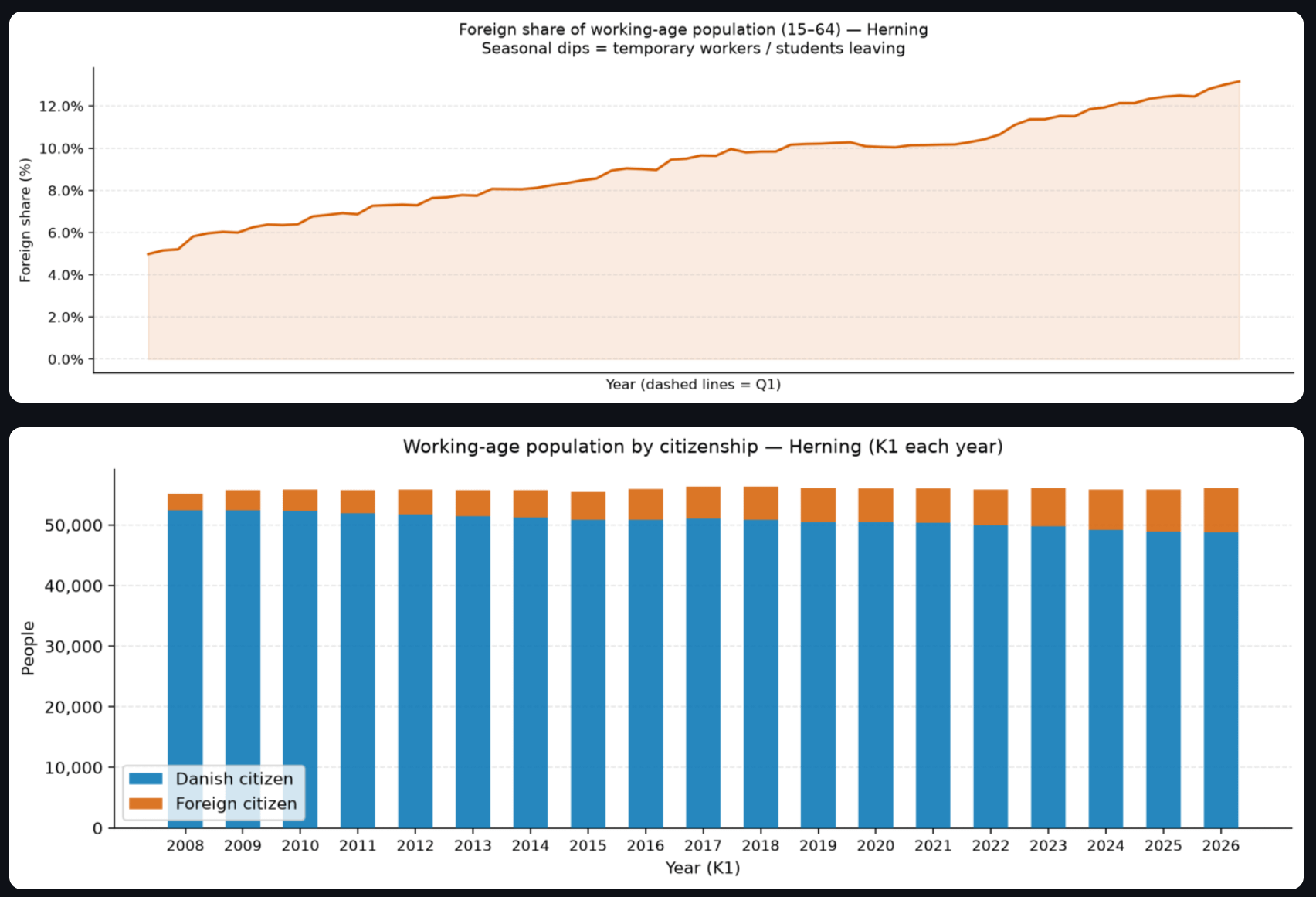
Herning is in central Jutland. It has huge conference centres and a large venue for concerts where big international names perform1. The Danish working population is slowly receding but you cannot tell because foreigners of working age have moved in.
2: Ikast-Brande (18.4% working age foreigners)
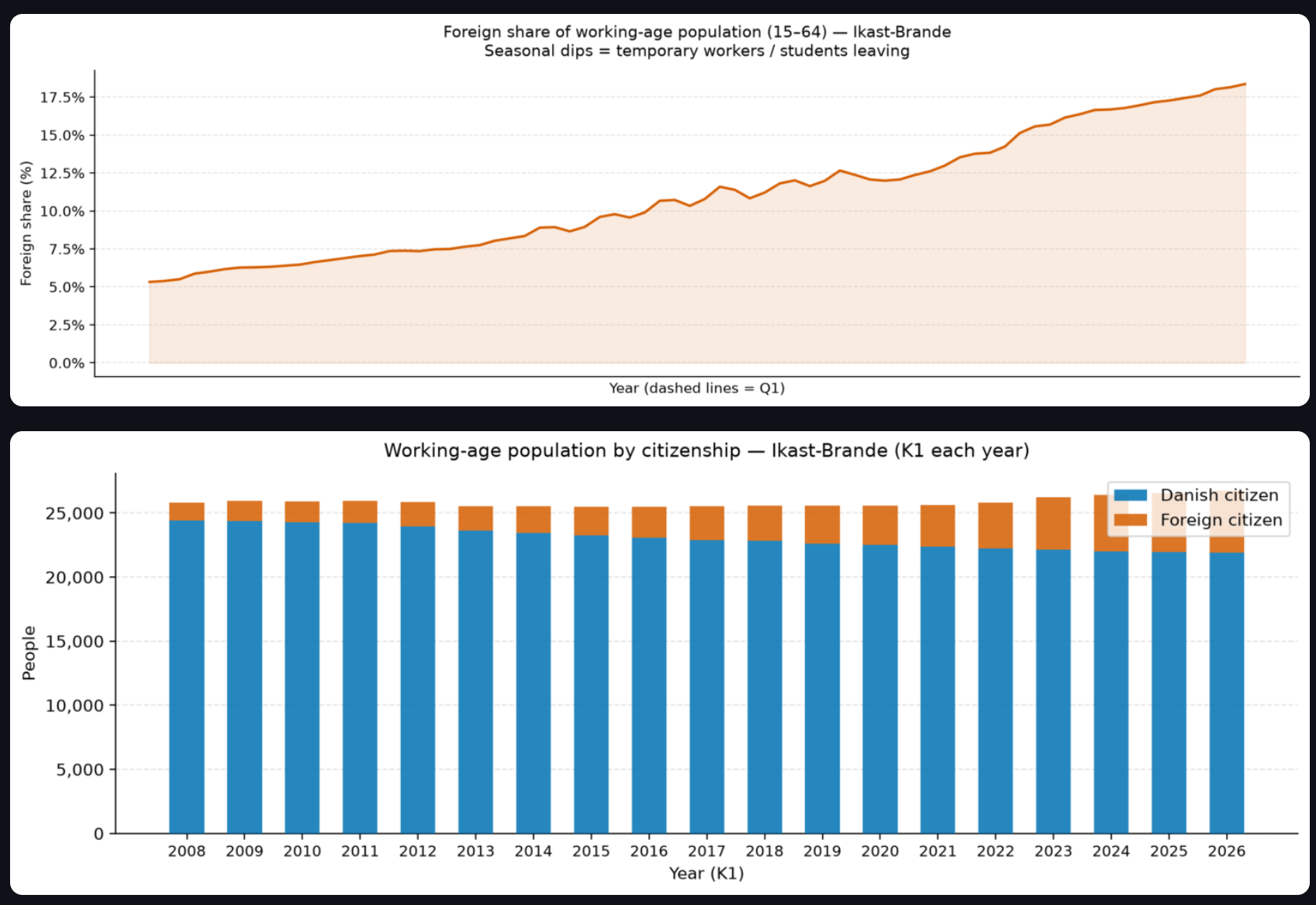
Ikast-Brande is made of two small cities and their surrounding towns and villages, near Herning. The working age population is increasing but only because of immigrants of working age. Drilling down a little into the numbers, I can see there are a lot of non-EU Europeans moving in.
3: Tønder (18.8% working age foreigners)
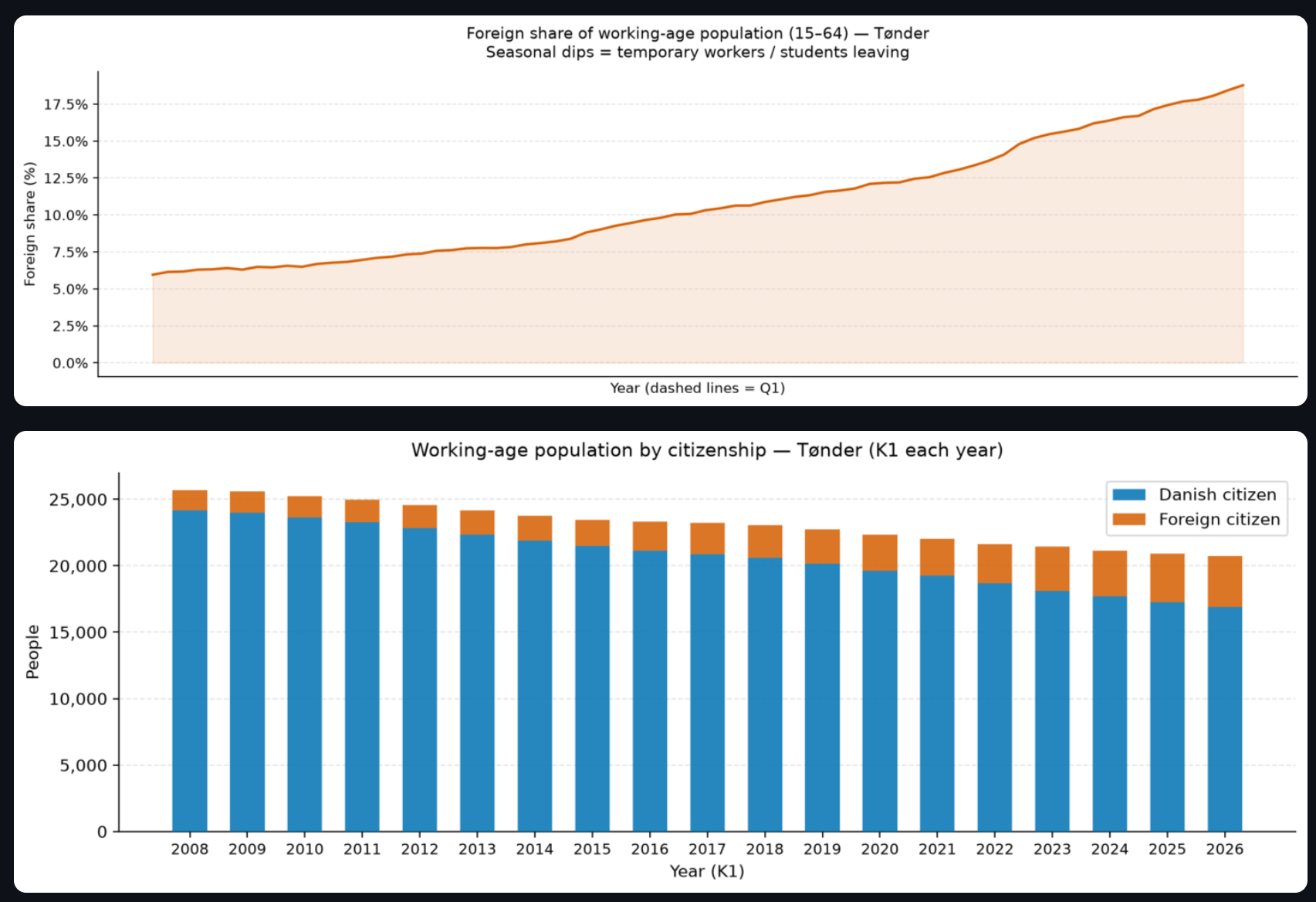
Tønder is near the border with Germany and despite the foreign working age population growing, it is not enough to offset the loss of Danish working age people. The largest group of foreigners to move to Tønder come from Germany, and it is possible that they are Danish-minority background Germans, I would need to go there to check it out.
4: Samsø (14.4% working age foreigners)
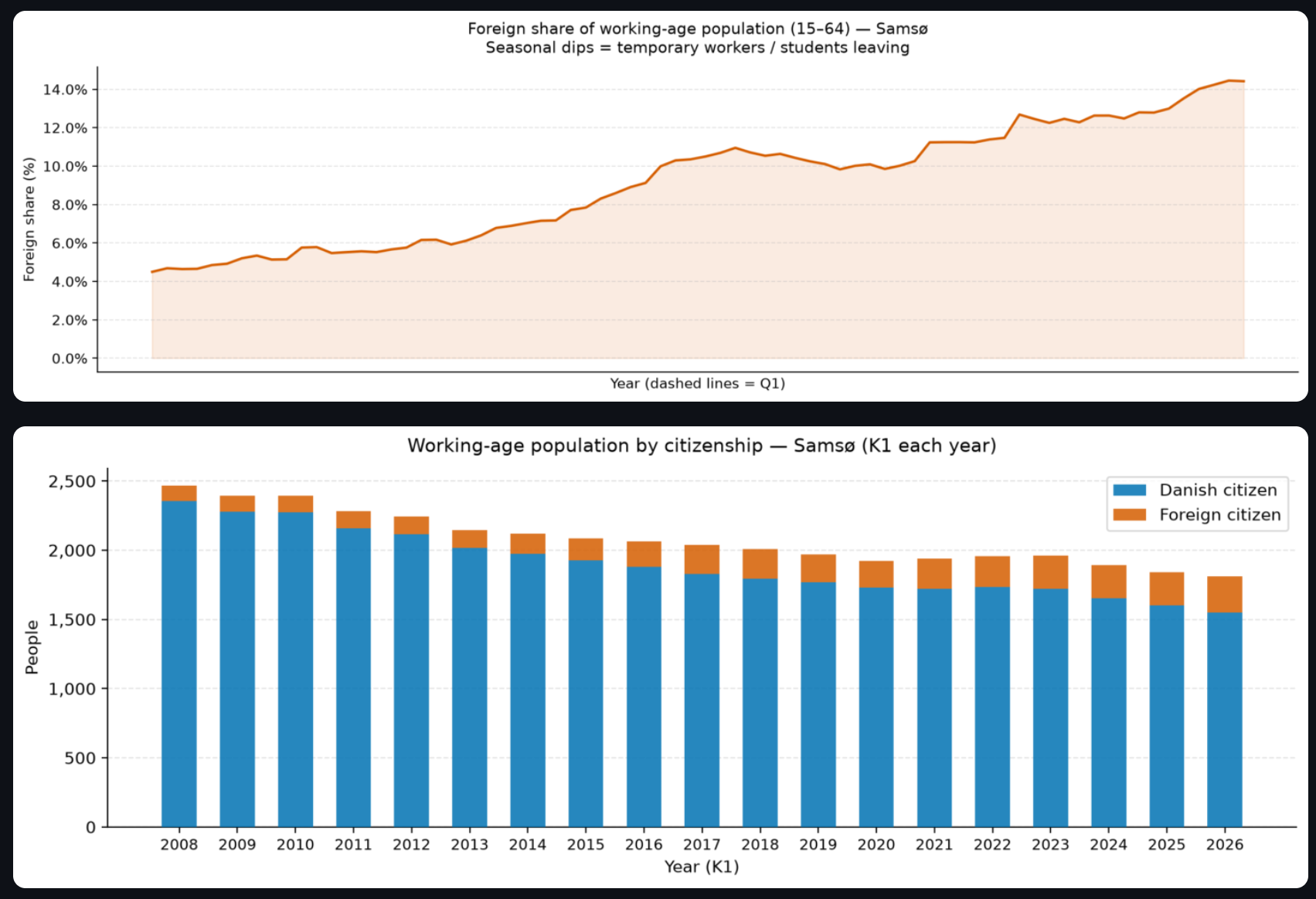
Samsø is an island in between Jutland and Zealand. It is one of the bigger ones and quite popular for tourism and so on. It is serviced by ferries into Aarhus which have been unreliable for some time. As the population crunches, pressure is put on daycare and schools as the numbers on roll drop, which becomes a vicious circle because families don’t move there because they hear that there aren’t enough places for their children.
What all four case studies have in common is that the number of working age foreigners is increasing. There are not that many communities in Denmark where that is not the case.
Also, the percentages of working age foreigners is much higher in some of these case-studies communities than the national average (14.9%2), or some cities seen as very international like Aarhus (13.5%).
What I don’t understand is why the national discourse about international workforce has not moved on from the basics (should we get some, are they temporary, how will we make sure they don’t depress wages), and into the actual weeds of planning for making thriving communities.
Can Tønder tempt more Germans to make up the numbers? If they can, what will it mean for Tønder if a fifth or even a quarter of the working age population is from another country? If they are Danish-minority Germans, is that just like having Danes move there or is it different?
Are Herning and Ikast-Brande ok? Does having a lot of Europeans from outside of the EU change how secure those workers feel in their jobs? What about Danish classes? Are they preparing the 15-20% of the population for a full life outside of work? Can they make friends with Danes with their language skills? Or will they make little siloed communities based on those they can communicate with? And is that ok?
The conversation must move on, we are way way beyond wondering whether more foreigners would be good for Denmark.
but when they were looking for a Eurovision location in 2014, the fans went mad because it is harder to get to than Copenhagen
for just working age
Super interesting! It's good to see the actual, thought-through data and move beyond the headlines we see in the news that are supposed to catch our attention.
Very interesting read!