
New Foreign Nationals
Who were the new foreign nationals in Denmark in 2024?
Last year, I found out the top five citizenships for work permits, EU work residency permits and study residency (EU and non-EU) to generate a list of countries fielding new arrivals. I want to follow-up on what I found out, and see if I can improve on it.1
If we look at the top ten rankings2 for 2023 they were:-
Romania
USA
Poland
India
Italy
Germany
China
Spain
Bulgaria
Nepal
In 2024, the data are very similar3
Romania
USA
Poland
Italy 🔼1
India ⬇️1
Germany
China
Spain
Nepal 🔼1
Bangladesh *️⃣
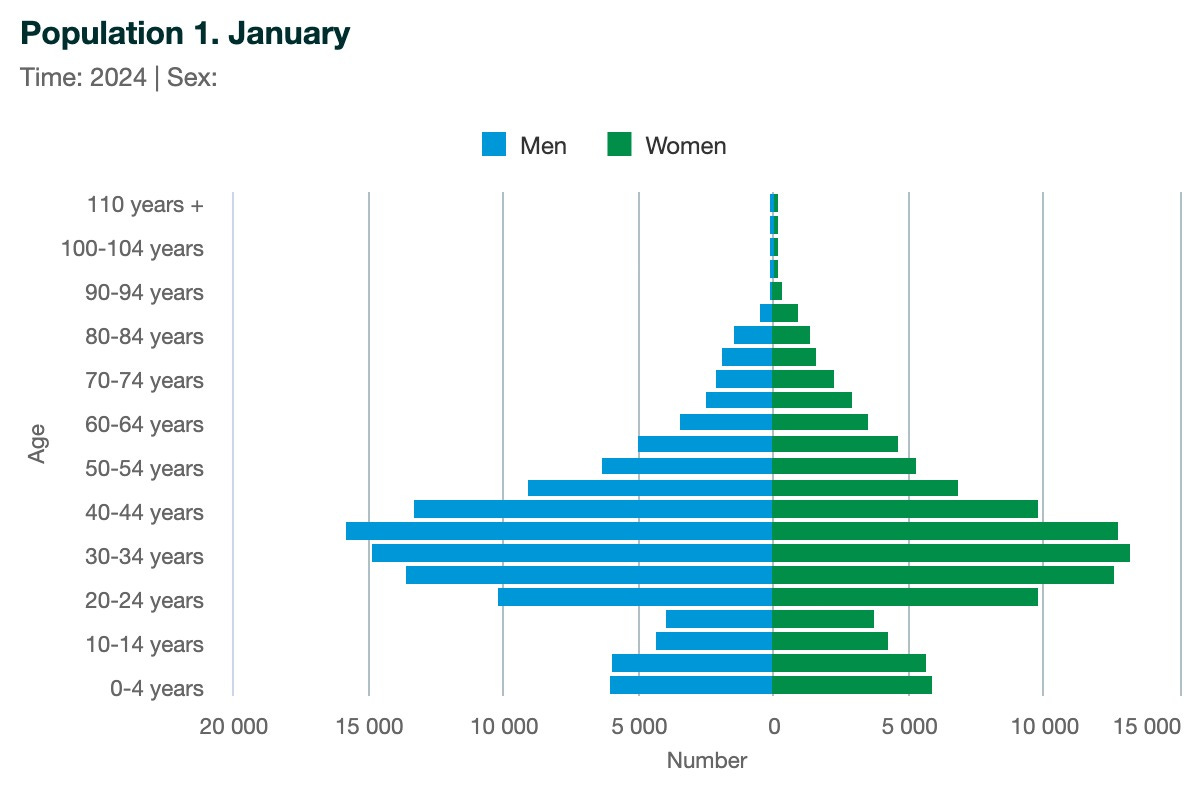
It is not possible to generate a population pyramid of the newcomers since it might be too identifying for some people from smaller countries, so we have to look at the data a bit sideways. I took the demographic information of everyone from these countries4, whether they arrived here recently or not. I think it is still informative because we can see the communities they are part of. By looking specifically at Work and Study residency permits, I wanted to see what is going on with the so-called ‘luxury immigrant’ population: (the skilled professionals and high-income earners), who the Danish kommuner are courting to solve their labour shortage issues, and bag them lots of lovely growth.
The demographics of the top ten “new” nationalities on January 1st 2024.
Here’s some interesting facets of these data
Around 20% were children, half of them coming from Romania and Poland.
Another 20% were in their 20s and again, a significant minority came from Romania and Poland.
There were 12 000 more working age men than working age women.
There were fewer children at high school age than other ages of children.
Around 5% were above 695 and over half of them were from Germany.
The big question for me is have they attracted who they were hoping would come to Denmark for work or study? And the next big question is: will they able to get them to stay long-term?
My previously published list missed Germany somehow.
For future replication: the exact categories I collected data on from StatBank VAN8K (provisional quarterly) and INDVAN (yearly) were: Study etc., Education, WorkEU/EEA, Wage-earners EU/EEA, Education
StatBank would like you to remember that these data are provisional and based on quarterly numbers. The confirmed numbers aren’t out yet.
Used FOLK2
Note to self: look into the over 100s in Denmark. I bet those data are off the hook.